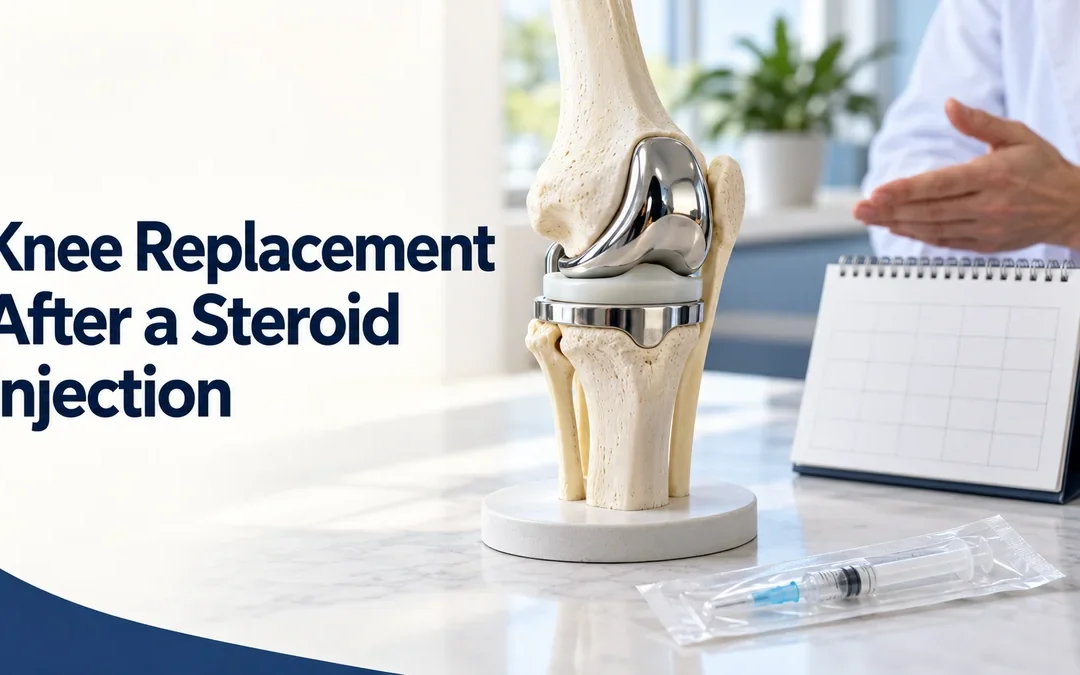
How Long After a Steroid Injection Can You Have Knee Replacement Surgery?
The reason for that interval is infection prevention. It is separate from how long the shot relieves pain. Knowing that difference helps you plan your next step without guessing.
What Is the Usual Waiting Period After a Knee Steroid Injection?
Many surgeons use a minimum three-month interval before elective knee replacement. The decision centers on the most recent injection into the knee receiving the implant. Your overall health also matters.
The AAOS explains this timing in its guidance on cortisone shots and future joint replacement. Ask your surgeon how that guidance applies to your records and planned procedure.
| Time since the same-knee steroid injection | What it means | Your next step |
|---|---|---|
| Less than one month | Recent injection timing needs particular attention during surgical review. | Contact the surgical team before accepting an earlier surgery opening. |
| One to less than three months | You remain within the commonly avoided interval. | Discuss symptom relief and preparation while your team reviews timing. |
| Three months or longer | The usual minimum interval may be satisfied. Other risks still need review. | Ask for confirmation of your earliest appropriate surgical date. |
| Date or medication unknown | An accurate interval cannot be established from memory alone. | Request the procedure note from the clinic that gave the injection. |
This table supports a conversation rather than a booking decision. Research does not establish one exact day when everyone’s risk disappears. Individual assessment remains essential.
How Do You Count Three Months After the Injection?
Count from the actual injection date, then confirm the endpoint with your surgeon. Your follow-up date and the day pain returned do not establish that interval.
For example, imagine receiving a right-knee injection on January 15. Three calendar months later is April 15. That example explains counting only. It does not approve an April 15 operation.
Some surgical offices document their policy using days rather than calendar months. Ninety days and three calendar months can differ. Let the office calculate the date using its own clinical policy.
Bring something more reliable than “sometime around the holidays.” A dated visit summary, injection record, or patient portal message can help. Ask the original clinic for missing documentation.
Also check which knee received treatment. People receiving bilateral injections can easily mix up dates. Separate entries for the right and left knees make the record easier to review.
- Record the date: Include the month, day, and year.
- Identify the side: Write right knee, left knee, or both knees.
- List the medication: Include its name and dose when available.
- Name the clinic: Give your surgeon a way to obtain the procedure note.
- Confirm the location: Specify the joint, surrounding tissue, or another body area.
Why Can a Recent Steroid Injection Affect Surgery Timing?
A recent injection may increase the chance of infection after joint replacement. Studies describe an association, especially when injections occur close to surgery. They do not predict what will happen to one person.
Corticosteroids reduce inflammation. Researchers have proposed local immune effects and bacterial introduction as possible explanations. The exact contribution of each mechanism remains uncertain.
The concern changes when a surgeon places an implant. Bacteria can attach to artificial surfaces and form protective layers called biofilms. Those infections can become difficult to clear.
Doctors call infection around a replacement a periprosthetic joint infection, or PJI. Treatment may involve antibiotics and additional surgery. Some cases require removal and later replacement of implant components.
That possibility explains why a seemingly small scheduling detail matters. A delay can disrupt work, travel, and family plans. An implant infection can create a much larger disruption.
A prior injection does not mean your knee is infected. It also does not mean replacement will fail. The goal is to reduce avoidable risk while planning treatment for your arthritis.
What Does Research Say About the Three-Month Recommendation?
Research supports caution, but studies differ on the size and timing of risk. Most evidence comes from observational studies. Those studies compare existing patient records rather than randomly assigning surgery dates.
Surgeon practice commonly includes a three-month interval
A 2021 survey examined injection practices among American Association of Hip and Knee Surgeons members. Respondents showed strong agreement about a three-month interval before surgery. Some preferred longer intervals.
That survey describes clinical practice. It does not prove that every patient needs exactly the same wait. It helps explain why your surgeon may use three months as a starting point.
Research reviews have found higher risk with recent injections
A 2023 research review combined studies of injections before total knee replacement. Its analysis found higher infection odds when injections occurred within three months. The overall findings depended on the timing group examined.
Combining studies can reveal patterns, but it cannot remove every difference between patients. Diabetes, smoking, medical history, and recording methods can affect results. An association is useful without being a personal prediction.
Individual studies do not identify one universal cutoff
A 2021 database study found the clearest risk increase within two weeks. It did not find the same pattern across all later intervals. Other studies support a broader period of caution.
A separate study published in 2024 examined different steroid medications. Results varied by medication and timing. Those findings do not establish a steroid that makes earlier surgery reliably safe.
The practical message is straightforward. Discuss your own history with the operating surgeon. Do not use one study, one online comment, or someone else’s experience as surgical clearance.
Does the Waiting Period End When the Shot Stops Helping?
No. Pain relief and surgical timing answer different questions. A shot can stop helping before your surgeon considers replacement appropriate.
Some people feel little improvement after an injection. Others notice relief that lasts longer. The duration of relief cannot confirm that a recent injection no longer matters for surgical planning.
Tell your care team when pain returned and what changed. Describe your walking distance, night pain, and trouble with stairs. Those details help the team plan symptom relief during the interval.
A useful update is specific: “I can walk one grocery aisle before stopping.” Another is: “Pain wakes me three nights each week.” Specific examples show how symptoms affect your day.
Do not wait silently because you assume nothing can happen before surgery. You can discuss pain control, assistive devices, and appointment timing now. Planning can continue even when the operation must wait.
Should You Have Another Steroid Injection If Surgery Is Likely?
Discuss another injection with the replacement surgeon before receiving it. A new same-knee injection can move the earliest surgery date. That tradeoff matters when you already want an operation soon.
Consider what you need from treatment. Are you postponing surgery for several months by choice? Or are you trying to reach the earliest reasonable operation date?
The 2023 ACR/AAHKS timing guideline addresses people with advanced, symptomatic arthritis. Its target group has tried unsuccessful nonsurgical care and chosen replacement. It conditionally recommends proceeding rather than requiring more injection trials.
This recommendation does not remove concern about an injection already received. The guideline separately acknowledges infection concerns when surgery follows a recent injection. These are two different timing decisions.
- Before another injection: Ask whether it could delay a planned operation.
- After a recent injection: Ask when your surgeon would consider surgery appropriate.
- If surgery remains uncertain: Discuss the expected benefit and limits of temporary symptom relief.
Share the same plan with every treating clinician. A primary care office may not know surgery is approaching. Clear communication can prevent an injection that conflicts with your preferred schedule.
Do Gel Injections, Other Injection Sites, or Steroid Pills Change the Answer?
Yes. Your surgeon needs the exact treatment details because “a shot” is not specific enough. Different medications, locations, and procedures cannot automatically share the same timing rule.
Gel injections into the knee
Hyaluronic acid injections are often called gel shots. They do not contain cortisone, but they still involve entering the joint. Studies have also raised infection concerns when these injections occur close to replacement.
A 2022 research review included corticosteroid and hyaluronic acid injections. It found higher infection risk with injections given within three months. Your surgeon may apply a waiting policy to gel injections too.
An injection into the opposite knee or another body area
A shoulder injection differs from an injection into the knee being replaced. Likewise, a left-knee injection differs from a right-knee injection. The same-joint evidence cannot automatically settle those situations.
Report those injections anyway, including back injections and injections around tendons or bursae. Ask whether the location, medication, or your health changes planning. Do not assume they are irrelevant or automatically require identical delays.
Fluid removal and other knee procedures
Joint aspiration removes fluid and may include laboratory testing. Sometimes clinicians inject medication during that same visit. Request the procedure note rather than assuming aspiration included a steroid.
Oral steroids and immune medicines
Prednisone and other daily medications need a separate perioperative plan. Do not stop prescribed steroids on your own. Your surgeon and prescribing clinician should coordinate changes when needed.
Can You See a Knee Replacement Surgeon During the Waiting Period?
Yes. A recent injection usually does not prevent a consultation or treatment planning. You can discuss whether replacement fits your symptoms before choosing a surgical date.
An evaluation typically includes your medical history, examination, and knee X-rays. Your surgeon considers pain, function, joint damage, and previous treatment. A scan alone does not describe the whole problem.
At that visit, discuss your goals in plain terms. You may want to walk your dog or finish a work shift. You may want to climb your front steps without repeated stops.
Learning about knee replacement surgery in Garden City, MI can help you prepare questions. Ask which parts of the evaluation matter most for your own symptoms.
Also ask what can happen before the waiting interval ends. Records transfer, insurance review, and home planning may begin earlier. Required testing has its own timing, so confirm when to arrange it.
Do not assume a consultation commits you to surgery. It gives you a clearer understanding of your choices. You can ask for a second opinion when you want more confidence.
What If Your Operation Is Already Scheduled Soon?
Contact the surgical office promptly if a recent injection may affect your booked date. Explain which knee received the injection and when. Ask the clinical team to review the record before changing your arrangements.
Do this even if another clinician previously knew about the injection. Information does not always reach every scheduling team. A direct update gives the operating surgeon a chance to review the same details.
A useful message includes four items: the procedure date, injection date, treated knee, and medication. Add the name of the clinic that performed the injection. Ask where to send the original note.
For example: “My right-knee replacement is booked for March 20. I received a right-knee injection on February 5. Please confirm whether the surgeon has reviewed that record.”
After the review, ask for the agreed next steps in writing. If the operation moves, confirm whether testing, authorization, and transportation need changes. Keep a list so you can update each arrangement once.
Avoid canceling essential care or changing medications while you wait for instructions. Also avoid making nonrefundable plans around an unconfirmed replacement date. Your office can explain what remains tentative and when to expect an answer.
What Other Health Factors Can Affect Your Surgery Date?
Your surgeon considers more than the injection interval before recommending an operation. Active infection, blood sugar concerns, smoking, and other medical problems may require attention. Your plan should explain which concerns apply to you.
Bring a full list of diagnoses and medications. Include kidney disease, heart disease, immune conditions, and previous joint infections. These details help your team coordinate appropriate care.
If you have diabetes, ask how to monitor and manage glucose around surgery. Ask whether your recent readings need review before booking. Do not change diabetes medication without instructions.
Tell the team about skin wounds, dental infections, and other new symptoms. An injection date cannot override a possible active infection. Ask whom to call if your health changes before surgery.
Smoking and nicotine use also belong in the conversation. Ask what support and preparation your surgeon recommends. A practical plan is more helpful than a vague instruction to “get healthier.”
Our discussion of factors that affect knee replacement candidacy provides related background. A temporary reason to postpone surgery does not always mean permanent ineligibility.
Leave with specific next steps when a concern needs attention. Ask who will address it and how progress will be checked. That turns an uncertain delay into a plan you can follow.
How Can You Manage Knee Pain While Waiting?
Ask your clinician for a temporary plan that fits your medical history. Pain control should support sleep and daily activity without creating another problem. There is no single medication plan for every patient.
Start by explaining what hurts most. Standing at work may be your main problem. For someone else, getting out of a chair or sleeping through the night matters more.
Discuss movement and daily routines
Ask which activities you can continue and how to adjust them. A physical therapist can help tailor movement and strength exercises. Avoid turning an online exercise list into a mandatory workout.
Consider practical changes around the house. Place frequently used items within easy reach. Break long tasks into shorter sessions and arrange help with heavy chores.
If your knee feels unstable, ask about a cane or walker. Proper fitting and instruction matter. An assistive device should make movement safer rather than introduce a new tripping problem.
Review medication choices before changing them
Ask whether a topical medicine, acetaminophen, or another option fits your situation. Kidney disease, ulcers, liver problems, and blood thinners can change that answer. A pharmacist can also help check your current medication list.
Bring every product you use, including supplements and over-the-counter pain medicines. Two packages can contain the same ingredient. Follow the care team’s directions rather than adding extra doses when pain rises.
Tell the team if the temporary plan stops working. You should know when to call and what changes need reassessment. Do not schedule another knee injection without discussing its effect on surgery timing.
Which Symptoms After an Injection Need Prompt Medical Attention?
Rapidly worsening pain, increasing redness, marked swelling, or a hot knee need prompt assessment. Contact the treating clinician urgently, especially if you feel unwell. Do not wait for a routine surgical appointment.
Temporary soreness can happen after cortisone shots. However, a possible infection should not be dismissed as a normal flare. A clinician may need to examine the joint and decide whether testing is necessary.
- Get urgent advice: Report worsening pain, redness, warmth, or swelling after the injection.
- Seek prompt assessment: Report new inability to bear weight or drainage from the injection site.
- Seek emergency care: Get help for severe illness, confusion, fainting, or breathing difficulty.
Fever or chills add concern, but their absence does not rule out infection. Tell the clinician when the injection happened and how symptoms changed. Bring your medication list if you can.
These symptoms need evaluation regardless of your planned replacement date. The immediate task is identifying the cause and getting appropriate treatment. Surgical scheduling can be reviewed afterward.
How Can You Use the Waiting Period to Prepare for Replacement?
Use the interval to organize the people, records, and arrangements your recovery may require. Preparation cannot guarantee an uncomplicated result. It can make the process easier to understand and manage.
If the procedure still feels unclear, start with the basic terms. Knee replacement is also called knee arthroplasty. Your surgeon should explain whether total or partial replacement fits your joint.
For a broader introduction, our guide to joint replacement surgery covers related procedures. Use background reading to build questions for your own consultation.
Organize records and instructions
Create one folder for your injection note, medication list, and appointment information. Add contact details for your primary care clinician and specialists. Keep written instructions where a support person can find them.
Ask which tests are needed and when results remain valid. Scheduling every test immediately may create unnecessary repeat visits. Follow the surgical office’s sequence instead.
Plan help at home
Discuss transportation, meals, errands, and the first days after discharge. Tell the team if you live alone. Ask about support options before the operation rather than after a problem develops.
Look at the route between your bed, bathroom, and kitchen. Remove loose rugs and clutter. Ask whether stairs, a low toilet, or your usual chair need special planning.
Account for Michigan weather
If recovery falls during winter, arrange help with snow and ice. Choose a safe route between your door and the car. A family member or neighbor may handle outdoor chores temporarily.
You can also plan around work duties and caregiving responsibilities. Ask what restrictions your surgeon expects for your situation. Give yourself room to adjust instead of promising a fixed recovery date.
Does Waiting After an Injection Change Knee Replacement Recovery?
The injection interval and the recovery period are separate parts of your care. Completing the waiting interval does not promise faster healing. Your procedure, health, strength, and rehabilitation plan all influence recovery.
Ask your surgeon how walking, therapy, wound care, and follow-up visits will work. Also ask what help you may need during the first days. Clear instructions matter more than matching someone else’s timeline.
Our article on recovery after knee replacement offers a starting point. Confirm which expectations apply to your own operation and discharge plan.
Discuss pain management before surgery, including whom to contact if pain becomes difficult. Ask how medicines, swelling control, and exercises fit together. You should understand the plan before you need it at home.
Bring up sleep, driving, work, and household responsibilities during the same conversation. These questions affect your schedule and support needs. They deserve answers before you settle on a date.
What Costs and Scheduling Details Should You Confirm?
Confirm coverage, estimates, and appointment requirements before arranging time away from work. An injection-related delay may also affect existing reservations and paperwork. Ask the office which details need updating if the operation moves.
Start with your insurance plan and the proposed surgical facility. Ask whether the surgeon, facility, and anesthesia services participate in your network. Confirm which estimates come from separate billing teams.
Then ask about physical therapy, medical equipment, and follow-up appointments. Coverage depends on your plan and clinical needs. A quoted surgical fee may not describe every expected expense.
Keep the questions concrete. “What is my estimated share?” is a useful starting point. So is: “If surgery moves, will authorization or preoperative testing need renewal?”
Write down the answers and the person who provided them. This does not turn an estimate into a guarantee. It gives you a clearer record for later questions.
Do not let a cancellation opening create pressure to skip the injection review. Ask the clinical team to approve the date first. Financial planning should follow the agreed medical plan.
What Should You Ask Your Knee Replacement Surgeon?
Ask for an explanation that connects your injection history with a specific treatment plan. You should understand the proposed timing and any remaining conditions. A good consultation leaves room for your practical concerns too.
- Was my injection inside the knee joint being replaced?
- Do you have the medication name and the exact injection date?
- What is the earliest surgical date you would consider for me?
- Does your office count calendar months or a particular number of days?
- Would another steroid or gel injection change that date?
- Do my blood sugar, medicines, or other conditions need attention first?
- What can I do if pain worsens while I wait?
- Which preoperative tests do I need, and when should I arrange them?
- What help, equipment, and therapy should I plan for afterward?
- Who should I call about new symptoms or scheduling changes?
Bring a support person if you find medical visits overwhelming. They can take notes and help remember instructions. You can also request a written summary of the next steps.
When comparing surgeons, focus on clear explanations, appropriate experience, and access to follow-up care. Ask how complications are handled and how rehabilitation is coordinated. Avoid treating a promised early date as proof of better care.
Frequently Asked Questions About Steroid Injections Before Knee Replacement
Can I have knee replacement six weeks after a cortisone shot?
Six weeks falls within the commonly avoided three-month interval for a same-knee injection. Contact your replacement surgeon to review the records and proposed date. Do not assume that an available operating slot means the timing is appropriate.
Does everyone need to wait six months?
No single six-month rule applies to every patient. Three months is a common minimum after a same-joint steroid injection. Your surgeon may recommend longer when your history or medical risks justify it.
Does one injection count if it did not relieve my pain?
Yes. Tell the surgeon about it even if the shot never helped. Pain relief does not establish the appropriate surgery interval. The injection date, medication, location, and your health still need review.
Can I complete my consultation before three months have passed?
Usually, yes. Consultation and planning can often happen before the operation becomes appropriate. Bring your injection record and ask what can be arranged during the interval. The office can explain appointment availability and requirements.
Can antibiotics make earlier surgery safe?
Do not treat antibiotics as a substitute for the surgeon’s timing plan. Standard surgical infection prevention does not provide personal clearance after a recent injection. Ask the surgeon directly rather than starting antibiotics on your own.
Does ultrasound guidance remove the waiting requirement?
Imaging can help guide needle placement, but it does not establish that earlier replacement is safe. Tell the surgeon whether imaging was used and provide the procedure note. The timing decision still needs clinical review.
Does partial knee replacement have the same timing rule?
Ask the surgeon performing your partial replacement. Much of the timing research concerns total knee replacement. Do not assume that a smaller operation removes concern about a recent injection into that joint.
Does robotic knee replacement change the waiting period?
Robotic assistance does not establish that a recent injection is irrelevant. You still need implant surgery and an infection-prevention plan. Ask your surgeon to apply their timing policy to the specific procedure proposed.
What if I cannot find my injection record?
Contact the clinic that performed the injection and request its procedure note. Check your visit summaries and patient portal too. Tell your surgeon what remains uncertain instead of choosing a date from memory.
Plan Your Next Step With Great Lakes Orthopaedics
Start with an appointment and your injection records. Together, those provide a useful basis for discussing treatment. You can ask about surgery timing without assuming an operation is already decided.
Great Lakes Orthopaedics provides orthopedic care in Garden City, Michigan. The practice also serves nearby communities, including Livonia, Canton, Plymouth, and Northville.
If pain is limiting your day, describe the activities you want to regain. Bring questions about the proposed procedure, costs, and help at home. Your next step should feel clear and manageable.
Request an appointment: Call (734) 422-8400 to discuss knee pain and replacement options.
Office: 6255 Inkster Rd, Suite 103, Garden City, MI 48135.
Hours: Monday through Thursday, 8:00 a.m. to 4:00 p.m. Friday, 8:30 a.m. to 3:00 p.m.