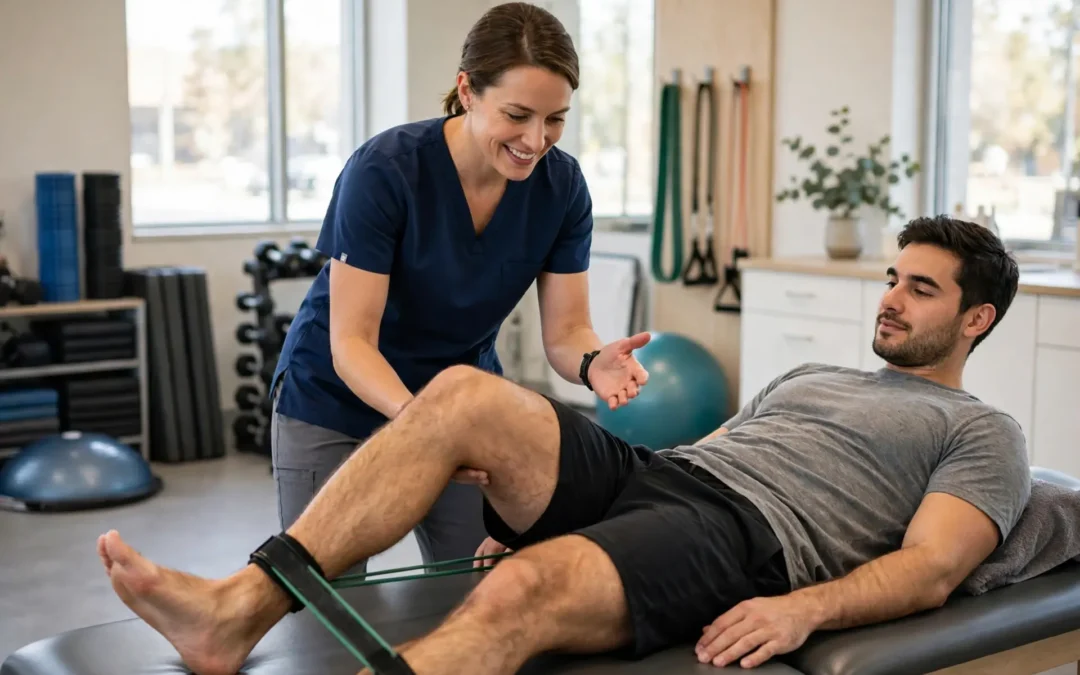
Physical therapy can help selected people manage an ACL tear without surgery. ACL reconstruction may be appropriate when the knee repeatedly gives way, demanding activities require pivoting, or other injuries change the treatment plan.
Both approaches involve rehabilitation. The decision depends on knee stability, associated injuries, activity goals, and your ability to follow treatment. An MRI report alone cannot choose the right path.
An ACL tear can interrupt much more than a sports season. It can affect work, stairs, driving, and confidence in your knee. You may feel pressure to choose quickly while hearing very different recovery stories.
The most useful comparison is structured rehabilitation alone versus reconstruction followed by rehabilitation. Neither approach guarantees a particular outcome. Understanding what each can accomplish helps you discuss a plan that fits your life.
The quick answer
Rehabilitation without reconstruction may suit a stable knee, an isolated injury, and activities without frequent cutting or pivoting. Reconstruction plus rehabilitation may suit persistent instability, demanding work, pivoting sports, or certain combined knee injuries.
Choosing therapy first requires follow-up and agreed activity limits. Choosing surgery requires months of rehabilitation. Neither choice should mean ignoring symptoms or rushing back before your knee is ready.
What does the ACL do?
The anterior cruciate ligament helps control forward movement and rotation between the shinbone and thighbone. It works with other ligaments, muscles, and joint structures to keep the knee stable.
An anterior cruciate ligament injury can happen during a sudden turn, awkward landing, or direct impact. Some injuries occur without contact. The ligament may be stretched, partly torn, or completely torn.
People often describe a pop, rapid swelling, and difficulty continuing the activity. Others notice instability later, after the initial pain settles. Symptoms vary, and similar symptoms can come from other knee injuries.
The menisci are pads of cartilage that help distribute loads within the knee. Joint-surface cartilage and other ligaments can also be injured. These accompanying problems may change both treatment and recovery.
That’s why an ACL diagnosis should include more than a tear label. The important questions concern knee function, other damage, and the activities you need to perform.
Confirm the injury before comparing treatments
A clinical assessment helps confirm the diagnosis and identify problems that need prompt treatment. Your clinician asks how the injury happened and examines swelling, movement, stability, and circulation.
An MRI can clarify ligament damage and reveal associated meniscus or cartilage injuries. X-rays may be used to assess bone injuries or existing arthritis. Not every person needs every test.
A painful, swollen knee can make the first examination difficult. Sometimes a repeat examination adds useful information. Ask whether the findings are clear or whether reassessment is needed.
The clinic’s guide to signs of a torn ACL provides additional background. Those signs support getting evaluated, rather than diagnosing yourself at home.
Don’t test knee stability by deliberately twisting or jumping. Report what happened during normal activity. Explain whether the knee buckles, catches, locks, or simply hurts, because those descriptions can point toward different problems.
Physical therapy vs. ACL reconstruction at a glance
The main difference is whether treatment includes surgically replacing the ligament. Both pathways aim to improve useful knee function and require active rehabilitation.
| Question | Rehabilitation without reconstruction | Reconstruction plus rehabilitation |
|---|---|---|
| Main approach | Improve strength, movement control, and activity tolerance | Reconstruct the ACL with a graft, then restore function |
| Who may consider it? | Selected patients without troublesome instability | Patients with instability, demanding goals, or relevant associated injuries |
| Does it replace the ligament? | No surgical replacement | Yes, usually using tendon tissue |
| Activity changes | May require avoiding cutting and pivoting activities | Temporary restrictions, followed by a gradual, tested return |
| Main concerns | Ongoing giving way, activity limits, and possible later surgery | Surgical complications, graft failure, and rehabilitation demands |
| Recovery measure | Stable function for agreed activities | Healing plus strength, control, and activity readiness |
| Guaranteed outcome? | No | No |
Your treatment may change after reassessment. Starting rehabilitation doesn’t rule out later surgery. Planning reconstruction doesn’t remove the value of therapy before the operation.
Who may manage an ACL tear with physical therapy?
Rehabilitation without reconstruction may suit people whose knees remain functionally stable for their goals. It is often considered for selected partial tears or isolated complete tears without troublesome giving way.
Activity demands matter. Walking, cycling, and other activities without sudden direction changes may be more manageable than competitive pivoting sports. Your clinician should help define which activities fit your knee.
Willingness to change activities is also important. Someone comfortable changing their recreational routine may make a different choice from a competitive athlete. Neither preference is wrong, but it should be discussed honestly.
Age alone doesn’t decide treatment. A highly active older adult may need a different plan from a younger person with modest demands. Health conditions and surgical risks also influence the discussion.
This pathway requires commitment, reassessment, and clear limits. It shouldn’t become months of repeated buckling without review. Your team should explain what progress looks like and which symptoms would prompt reconsidering surgery.
What nonsurgical ACL rehabilitation involves
Nonsurgical rehabilitation develops strength and movement control to support an ACL-injured knee. The program changes as symptoms settle and your abilities improve.
Early goals: comfort and movement
Initial care usually addresses swelling, comfortable movement, and muscle activation. Your team may recommend temporary support or walking aids. Advice should reflect other injuries, not just the ACL finding.
Regaining knee extension, meaning the ability to straighten the knee, is often important. However, exercises and movement limits must be individualized. A locked knee needs assessment rather than forceful stretching.
Strength and control
Later training targets the quadriceps, hamstrings, hips, and overall leg function. Balance work helps you respond to changing loads. Exercises should become challenging enough to build capacity without repeatedly provoking instability.
Activity-specific practice
Your therapist gradually introduces tasks related to work, exercise, or daily life. Examples may include stairs, controlled stepping, and approved gym activities. Advanced activities require assessment and clearance.
The clinic’s overview of the benefits of physical therapy explains its broader role. For an ACL injury, a written, progressive plan is more useful than an unrelated exercise list.
Keep a simple record between appointments. Note exercises completed, swelling afterward, and any giving-way episodes during ordinary activity. Bring questions about tasks that remain difficult. This helps your therapist adjust the program using your actual response, rather than guessing from how the knee feels during one clinic visit.
Can physical therapy heal a torn ACL?
Physical therapy can improve function without necessarily restoring the ACL’s original structure. Stronger muscles and better coordination can help some people control their knees during appropriate activities.
Some ACL injuries show healing on follow-up imaging. However, healing potential varies, and an improved scan doesn’t automatically establish safe sporting function. A fully torn ligament shouldn’t be assumed to become normal through exercise alone.
The practical goal is dependable knee function for agreed activities. That includes how the knee behaves when you become tired or encounter an unexpected movement. Pain relief alone doesn’t answer that question.
Ask your clinician to separate three issues: ligament appearance, measured stability, and real-world function. They relate to each other, but they aren’t identical. Understanding those differences can prevent confusing a comfortable knee with a fully recovered knee.
Who may benefit from ACL reconstruction?
ACL reconstruction may be appropriate when instability prevents the activities you need or want. Repeated giving way despite rehabilitation is a particularly important reason for reassessment.
People returning to cutting and pivoting sports often consider reconstruction. Examples include soccer, basketball, and football. Certain jobs also involve turning, climbing, or unpredictable loads that challenge knee stability.
Associated injuries can change the recommendation. A repairable meniscus tear, multiple ligament injuries, or other structural damage may influence the surgical plan. These situations require assessment rather than a blanket rule.
Reconstruction is intended to improve mechanical stability. It doesn’t automatically restore strength, endurance, confidence, or sport-specific skill. Those remain rehabilitation goals after the operation.
A useful recommendation connects your examination to your actual demands. Ask why surgery is expected to help your specific problem. Also ask what might remain limited and what the rehabilitation commitment will involve.
Discuss a treatment plan for your knee
Considering physical therapy or ACL reconstruction in Garden City, Michigan? Request an appointment with Great Lakes Orthopaedics. Bring your imaging, injury history, and questions about returning to work or sport.
Call to request an appointment:
(734) 422-8400
What happens during ACL reconstruction?
ACL reconstruction usually replaces the damaged ligament with a tendon graft. The surgeon positions and secures the graft to reproduce the ACL’s stabilizing role.
The operation commonly uses an arthroscope, a small camera inside the knee. Additional incisions allow graft placement and, when needed, graft collection. Your surgeon explains the technique and any associated procedures.
Reconstruction differs from primary ACL repair. Repair aims to preserve and reattach suitable injured tissue. It may be considered for selected tear patterns, but it isn’t appropriate for every tear.
Ask which operation is actually being proposed. Terms such as reconstruction, repair, augmentation, and biologic treatment describe different approaches. A technique name alone doesn’t establish that it offers a better outcome.
Many reconstructions are outpatient procedures. Discharge depends on your medical needs, comfort, and safe mobility. Confirm the expected plan, including transport, home help, and whom to contact afterward.
How graft choice affects the decision
Graft choice balances your activity demands, tissue options, and individual risks. An autograft uses your own tissue. An allograft uses donor tissue.
Common autograft sources include the patellar, hamstring, and quadriceps tendons. Each has tradeoffs involving the collection site, rehabilitation considerations, and potential symptoms. No graft is best for every patient.
For younger or highly active patients, surgeons often favor autograft because donor graft failure is a concern. Ask how your age, sport, and previous operations influence the recommendation.
Discuss practical demands too. Frequent kneeling at work may matter when considering graft-site symptoms. Previous tendon injuries or surgery may affect available choices.
You don’t need to choose a graft from online opinions alone. Ask why the recommended option fits your knee. Confirm how it changes precautions, recovery planning, and the risks most relevant to you.
What research says about therapy first versus early reconstruction
Research supports rehabilitation-first care for some patients, while also showing reasons to consider early reconstruction. Studies compare treatment strategies within selected groups, not identical outcomes for every injured person.
The KANON randomized trial compared early reconstruction with rehabilitation plus optional later reconstruction. At five years, the early-surgery strategy wasn’t superior for the main patient-reported outcome. Some participants in the rehabilitation-first group later underwent surgery.
The COMPARE randomized trial found better reported knee function with early reconstruction at two years. However, the authors considered the clinical importance of that difference uncertain. Some rehabilitation-first participants avoided surgery, while others chose later reconstruction.
These findings don’t mean that surgery never helps or that everyone should delay it. They also don’t mean every complete tear requires immediate reconstruction. Patient selection, instability, and activity goals remain central.
Ask which evidence applies to your injury. Results from selected adults may not apply directly to growing children, major combined injuries, or every competitive athlete. Group averages cannot replace your clinical assessment.
Should you try therapy before deciding about surgery?
A supervised rehabilitation trial can be reasonable when your clinician considers it appropriate. It should have a review date, activity boundaries, and clear reasons to change course.
Therapy before surgery is also common. Often called prehabilitation, it addresses swelling, movement, walking, and strength. Its purpose is preparation, not proving that you can tolerate repeated instability.
Timing needs an individualized discussion. The AAOS guideline favors early reconstruction when surgery is indicated for an acute isolated ACL tear. It notes increasing risk of additional meniscus and cartilage injury within three months.
That recommendation doesn’t make every ACL tear a surgical emergency. It does mean that an open-ended delay deserves discussion when reconstruction is already indicated. Other injuries and readiness for surgery also matter.
Review the AAOS guidance on ACL injury management with your clinician. Ask how it applies to your knee and planned activity level.
Signs that a rehabilitation-first plan needs reassessment
A rehabilitation plan needs reassessment when symptoms or function stop matching its goals. That doesn’t automatically mean surgery, but it does mean the plan deserves review.
- The knee repeatedly gives way during ordinary or approved activities.
- New swelling develops after a twisting or buckling episode.
- Catching or locking appears, especially if the knee cannot straighten.
- Strength improves, but the knee still cannot meet essential demands safely.
- Your work or sporting goals change in ways that require greater stability.
Tell your team exactly what happened. Include the activity, symptoms, and any swelling afterward. Don’t repeat the movement simply to confirm that it still causes trouble.
Before changing treatment, your clinician may reassess associated injuries and rehabilitation progress. Difficulties can reflect several factors. A useful review identifies the problem rather than treating every setback as personal failure.
Why meniscus and other knee injuries matter
Other knee injuries can change both the preferred treatment and the rehabilitation rules. An isolated ACL injury is different from a knee with several damaged structures.
A displaced meniscus tear may block movement. Other tears may be repairable and require protection during recovery. Ask whether preserving the meniscus is possible and how that affects planning.
Not every accompanying ligament injury requires the same treatment. Some may heal with bracing and rehabilitation, while others need surgery. The combination of injuries determines the approach.
After surgery, meniscus repair can change weight-bearing and motion instructions. A friend’s isolated ACL program may therefore be inappropriate for you. Get instructions that name every procedure performed.
This detail matters when comparing recovery stories. Two people can both say they had ACL surgery while facing different restrictions. Ask what your complete diagnosis means for your own next steps.
Recovery timelines: compare milestones, not promises
ACL recovery depends on the treatment pathway, other injuries, and measured progress. Daily walking, running, and competitive sport are different milestones.
| Milestone | Rehabilitation without reconstruction | After reconstruction |
|---|---|---|
| Early care | Settle symptoms and restore safe movement | Protect surgical work, manage symptoms, and begin prescribed movement |
| Strength building | Progress exercises while monitoring stability | Progress exercises within graft and associated-repair precautions |
| Running | Requires suitable function and approval | Requires healing time, strength, control, and approval |
| Pivoting sport | May remain unsuitable despite comfortable daily activity | Often discussed around nine to twelve months or longer, with testing |
| Long-term plan | Monitor stability and maintain strength | Maintain strength and monitor symptoms and activity demands |
These are general expectations, not clearance dates. Some people need longer after reconstruction, especially for demanding sports. Recovery without surgery can also take months of structured work.
Ask for your next milestone rather than only a finish date. Knowing what must improve makes the rehabilitation plan easier to understand.
How clinicians judge readiness for running and sport
Readiness requires more than a quiet knee and a certain number of months. Clinicians assess symptoms, strength, movement quality, and the demands of your activity.
Testing may include strength measurements, balance tasks, and later hopping or landing assessments. Your therapist selects appropriate tests and explains the results. These activities shouldn’t become unsupervised challenges at home.
Comparing both legs can help, but it isn’t the entire picture. The uninjured leg may also lose conditioning. Your team may consider absolute strength, movement patterns, and sport-specific capacity.
A gradual return usually separates participation, training, and competition. Completing part of a practice differs from playing a full match. Fatigue and unexpected contact can create demands that controlled testing doesn’t fully reproduce.
No test guarantees freedom from reinjury. A clear assessment process still provides better guidance than confidence or a calendar alone.
Confidence and fear are part of ACL recovery
Confidence affects how you move and whether you feel ready for demanding activities. Fear after an injury is understandable, even when strength and swelling improve.
Tell your therapist which situations feel unsafe. You might trust stairs but fear sudden stops. That information helps shape gradual practice within your treatment limits.
Avoid pressure to prove readiness during an unplanned game or workout. Ask how controlled drills will progress toward the activity that worries you. Some people benefit from additional psychological support.
The goal is informed confidence. That means understanding your abilities and remaining limits. Neither forcing activity through fear nor avoiding all movement indefinitely is a useful universal plan.
Risks and limitations of each treatment
Each pathway has tradeoffs that deserve a specific discussion. The aim is to understand which risks matter most for your knee and goals.
Rehabilitation without reconstruction
Possible limitations include ongoing instability, restrictions on preferred activities, and later reconstruction. Repeated instability may expose the meniscus or cartilage to further injury. Good strength doesn’t guarantee safe pivoting.
A supervised plan reduces uncertainty by monitoring function and symptoms. It cannot guarantee that surgery will never become necessary.
Reconstruction plus rehabilitation
Possible complications include infection, blood clots, stiffness, persistent pain, and graft failure. Symptoms can also occur where graft tissue was collected. Further surgery may sometimes be needed.
Reconstruction doesn’t guarantee return to your previous sporting level. It also doesn’t eliminate the possibility of another knee injury. Ask how your individual risks compare with the expected benefit.
Does ACL reconstruction prevent arthritis?
ACL reconstruction doesn’t guarantee prevention of future knee arthritis. An ACL injury can affect long-term joint health even after stability improves.
Associated cartilage damage, meniscus injury, and later injuries can influence the future knee. Reconstruction may help selected patients control instability and protect joint structures during activity. That isn’t the same as proving arthritis cannot develop.
Ask what long-term follow-up and activity guidance your clinician recommends. Maintaining strength and addressing new symptoms remain useful with either treatment pathway.
Be cautious with absolute claims that surgery prevents arthritis or that nonsurgical care always causes it. Your risk depends on more than one treatment decision. A balanced explanation should acknowledge those limits.
Work, driving, and preparing for daily life
Practical planning should reflect your actual duties and home situation. An office worker and someone climbing ladders face different demands, even with similar injuries.
Write down the movements your job requires. Include kneeling, carrying, uneven surfaces, and sudden turns. Ask whether temporary duties or a phased return are appropriate.
Driving requires safe control and reliable emergency braking. The injured side, vehicle type, brace, and medicines all matter. Don’t drive while sedated or before your team confirms appropriate readiness.
For surgical recovery, arrange transport and help with essential tasks. Ask about stairs and any walking aids before discharge. Clear loose rugs and arrange frequently used items within easy reach.
In Michigan winter, plan for icy paths between your door and vehicle. Ask someone else to handle snow removal while your mobility is limited. A safe routine supports both treatment pathways.
Compare the full costs of treatment
Treatment costs include more than a scan or an operation. Rehabilitation, follow-up, transport, and time away from work can affect either pathway.
For reconstruction, request an estimate covering surgeon, facility, anesthesia, and planned associated procedures. Ask which equipment, therapy, and follow-up services are billed separately.
For rehabilitation-first care, clarify visit limits and likely reassessment needs. Ask what happens financially if later surgery becomes appropriate. Insurance requirements shouldn’t be confused with a clinical recommendation.
Confirm coverage and network status with your insurer and providers. A lower initial cost doesn’t necessarily describe the whole treatment course. Compare plans that address the same goals and services.
ACL treatment in children and teenagers
Children and teenagers need an assessment that considers growth and sporting demands. Open growth plates affect surgical planning, but young age doesn’t automatically mean avoiding reconstruction.
Repeated instability can place other knee structures at risk. At the same time, surgery requires techniques appropriate for skeletal maturity. Families should discuss both concerns with a clinician experienced in pediatric ACL injuries.
School schedules and upcoming seasons are practical considerations, but they shouldn’t set clearance dates. Ask how the rehabilitation plan will include parents, therapists, coaches, and school staff.
Make sure the young athlete understands the plan too. Their goals, concerns, and willingness to participate matter. Return should follow medical assessment rather than pressure from a competition calendar.
When knee symptoms need prompt attention
Some symptoms require assessment sooner than a routine rehabilitation review. An ACL diagnosis doesn’t explain every new problem that develops.
Seek urgent assessment for a knee that becomes locked, major worsening swelling, or inability to bear weight after injury. New calf pain or swelling, fever, wound drainage, or increasing redness after surgery also needs prompt medical advice.
Call 911 for chest pain or sudden breathing difficulty. A cold, pale, numb foot or major circulation change after injury requires emergency assessment.
If the knee is repeatedly giving way, contact your treating team rather than continuing the same activity. Review the clinic’s guide to when to visit an orthopedic clinic for general appointment guidance.
Questions to ask before choosing a treatment pathway
Your consultation should connect the diagnosis to a clear plan. Bring a short list of priorities and ask for written next steps.
- Is my ACL partly or completely torn, and how stable is my knee?
- Do I have a meniscus, cartilage, or other ligament injury?
- Is rehabilitation without reconstruction reasonable for my goals?
- Which activities should I avoid during the initial treatment period?
- What findings would make you recommend reconstruction?
- If surgery is indicated, how should we balance timing and preparation?
- Which graft would you recommend, and why?
- Will other procedures change weight-bearing or exercise restrictions?
- What testing will guide running, work, and return to sport?
- What support, appointments, and financial commitments should I plan for?
The practice’s sports medicine services provide a starting point for discussing an activity-related injury. Bring previous imaging and treatment records when available.
Frequently asked questions
Can you walk with a completely torn ACL?
Some people can walk after the initial symptoms settle. That doesn’t establish safe stability during turning or sport. Walking ability alone shouldn’t determine whether you need reconstruction.
Is physical therapy required after ACL reconstruction?
Yes. Reconstruction replaces the ligament’s stabilizing role, while rehabilitation restores movement, strength, and control. Surgery doesn’t remove the need for a progressive recovery program.
Does less pain mean my ACL tear has healed?
No. Pain and swelling can improve while instability remains. Follow-up assessment and functional testing provide more useful information than pain relief alone.
Can I choose reconstruction after trying rehabilitation?
Yes, when later assessment supports it. However, therapy first should include monitoring and activity guidance. Discuss new instability or changing goals promptly rather than delaying review indefinitely.
Will a knee brace replace surgery?
A brace may be recommended for support in selected situations. It doesn’t replace a structured treatment plan or guarantee control during demanding activity. Ask when it helps and what limits still apply.
When can I return to soccer or basketball?
That depends on treatment, associated injuries, progress, and medical clearance. After reconstruction, pivoting-sport return often involves nine to twelve months or longer. Testing and gradual training remain necessary, regardless of the date.
Making an informed ACL treatment decision
The right plan fits your knee’s stability, complete diagnosis, and real activity goals. Ask what each pathway offers, what it cannot promise, and how progress will be measured.
Patients in Garden City, Livonia, Canton, Plymouth, and Northville can discuss concerns with Great Lakes Orthopaedics in Garden City. A clear assessment can help you understand whether rehabilitation alone or reconstruction with rehabilitation deserves consideration.
Get clarity about your ACL treatment options
Request an appointment with Great Lakes Orthopaedics to discuss your injury, knee stability, and next steps.
6255 Inkster Rd #103, Garden City, MI 48135
(734) 422-8400
Educational information: This article provides general information and doesn’t replace an individual diagnosis or treatment plan. Follow your treating clinician’s instructions about exercises, weight-bearing, medicines, and activity clearance. Seek urgent care for concerning symptoms.