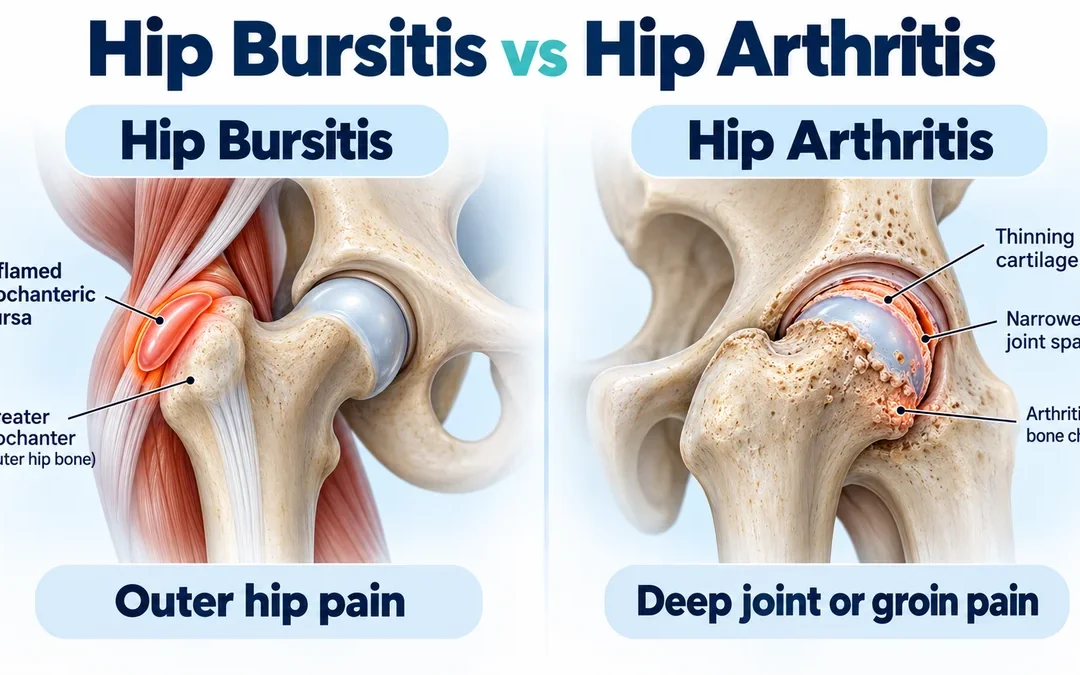
Hip bursitis affects a cushioning sac near the hip. Hip arthritis affects the joint itself.
Outer hip tenderness often points toward bursitis or a related tendon problem. Deep groin pain and reduced movement can suggest arthritis.
These patterns overlap. An examination helps identify what is causing your pain and which treatment fits.
Hip Bursitis vs. Hip Arthritis at a Glance
Pain location offers a clue, but it cannot confirm a diagnosis. Both conditions may hurt during walking or disturb sleep.
Outer Hip Bursitis or Tendon Pain
- Location: Outside of the hip, sometimes down the outer thigh.
- Triggers: Side-lying, stairs, or prolonged walking.
- Typical clue: Tenderness over the outer bony hip.
- First steps: Activity changes and guided rehabilitation.
Hip Osteoarthritis
- Location: Often the groin or front of the thigh.
- Triggers: Weight-bearing, turning the hip, or putting on shoes.
- Typical clue: Deep aching with reduced movement and stiffness.
- First steps: Adapted exercise and symptom management.
These are common patterns. They cannot confirm a diagnosis.
What Is Hip Bursitis?
Hip bursitis means a fluid-filled cushioning sac near the hip becomes inflamed. The trochanteric bursa sits near the outer bony point of your thigh bone.
However, outer hip pain does not always come from an inflamed bursa. Nearby gluteal tendons can also cause symptoms. The broader term
greater trochanteric pain syndrome
covers several problems around this area.
Common Symptoms of Outer Hip Bursitis
- Pain when lying on the affected side.
- Tenderness over the outer hip.
- Discomfort with stairs or repeated hip movements.
- Aching that may extend along the outside of the thigh.
Another hip bursa, called the iliopsoas bursa, sits toward the groin. Irritation there can cause front-of-hip pain, which makes diagnosis less straightforward.
What Is Hip Arthritis?
Hip arthritis describes conditions that damage or inflame the hip joint. Osteoarthritis is a common type and involves changes in cartilage, bone, and surrounding tissues.
Rheumatoid arthritis and other inflammatory diseases can also affect the hip. These may need treatment from a rheumatologist alongside orthopedic care.
Common Symptoms of Hip Osteoarthritis
- Deep groin pain or aching in the thigh.
- Stiffness after sitting or resting.
- Difficulty turning the hip or putting on socks.
- Pain that limits walking and daily activities.
The American Academy of Orthopaedic Surgeons explains these changes in its
hip osteoarthritis guide.
Can You Have Hip Bursitis and Arthritis Together?
Yes. Joint arthritis and painful outer hip tissues can occur together. Treating one problem may leave symptoms from the other.
Tell your clinician about every painful area. Mention groin stiffness, outer tenderness, sleep problems, and changes in your walking.
Helpful clue: Point to the pain with one finger if possible. Explain which movements trigger it and whether it spreads.
How Does a Doctor Tell the Difference?
A clinician combines your history, examination, and selected tests. A scan alone does not explain every painful hip.
- History: When pain started, injuries, activity changes, and morning stiffness.
- Examination: Tenderness, strength, walking pattern, and hip movement.
- X-rays: Helpful for assessing joint space and bone changes.
- Other tests: Ultrasound, MRI, or blood tests when the findings justify them.
The examination may also check your back and nerves. Pain around the hip can come from another area.
Treatment Options for Hip Bursitis and Outer Hip Pain
Treatment usually starts with reducing irritation and gradually rebuilding strength. Surgery is rarely needed for bursitis alone.
Adjust Activities and Pressure
Reduce activities that clearly worsen symptoms. Avoid lying directly on the sore side. For tendon-related pain, avoid prolonged positions that press the outer hip tissues together.
Use Guided Physical Therapy
A therapist can adapt strengthening and movement to your symptoms. Our overview of the
benefits of physical therapy
explains its role in orthopedic care.
Discuss Medicines and Injections
Pain medicines or an injection may be considered after assessment. Ask about side effects and whether an injection addresses your specific pain source.
Check before taking anti-inflammatory medicines if you have kidney disease, ulcers, or take blood thinners.
Treatment Options for Hip Arthritis
Hip arthritis treatment depends on the type, severity, and effect on your life. Having arthritis does not automatically mean you need surgery.
Options include adapted exercise, physical therapy, walking aids, and medicines when appropriate. Weight management may help when excess body weight adds strain.
Inflammatory arthritis may need medicines that control the underlying disease. Joint replacement may be considered when substantial pain persists despite suitable nonsurgical treatment.
Our
hip surgery services
describe care for damaged hip joints. For procedure details, explore our
hip replacement surgery guide.
Need help choosing your next step?
Call
(734) 422-8400
to request an evaluation. An appointment can help clarify the cause before you consider treatment.
Is Walking Good for Hip Pain?
Walking may help maintain mobility when the amount suits your condition. Shorter walks on level ground may be easier than hills or long distances.
Reduce the distance if walking increases pain or makes you limp. Ask for guidance if symptoms persist rather than repeatedly pushing through them.
If surgery becomes part of your plan, learn about
walking after hip surgery.
Your surgeon will set your individual recovery instructions.
When Should You Seek Medical Care?
Arrange an evaluation when hip pain disrupts sleep, limits daily tasks, or keeps returning. Worsening pain deserves attention even without an injury.
Seek urgent care for sudden severe pain, a hot or swollen hip, or fever with hip pain. After a fall, severe pain or inability to bear weight needs emergency assessment.
Frequently Asked Questions
Does hip bursitis feel different from arthritis?
Outer bursitis often causes localized tenderness and pain with side-lying. Arthritis commonly causes deep aching and stiffness. The overlap means symptoms alone cannot confirm the cause.
Can hip arthritis cause pain on the outside of the hip?
Yes. Arthritis pain can extend beyond the groin. Outer hip pain may also reflect a separate tendon or bursa problem.
Will an X-ray show hip bursitis?
X-rays mainly assess bones and joint changes. They do not directly show an inflamed bursa well. Your examination helps determine whether other imaging is useful.
Does hip bursitis turn into arthritis?
Bursitis does not mean your joint is developing arthritis. The conditions affect different structures and can occur independently or together.
Will I need hip replacement for bursitis?
Hip replacement treats a damaged joint, not isolated bursitis. Most bursitis care starts with nonsurgical options.
Which doctor should I see for ongoing hip pain?
A primary care clinician or orthopedic specialist can begin the evaluation. Suspected inflammatory arthritis may also require a rheumatologist.
Get Help for Hip Pain in Garden City
Hip pain can make simple tasks feel difficult. A clear diagnosis helps you choose your next step.
Great Lakes Orthopaedics
provides orthopedic care in Garden City, Michigan. Call to request an appointment and discuss your symptoms.
6255 Inkster Rd, Suite 103
Garden City, MI 48135
This article provides general education. A clinician must assess your symptoms to diagnose the cause and recommend treatment.